White Polka: A Playful Display Font for Creative Projects
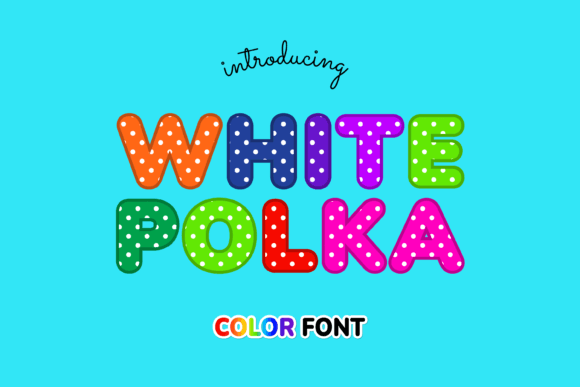
There’s a specific kind of joy in finding a typeface that doesn’t just sit on a page but actively contributes to the story you’re telling. White Polka is one of those finds. It’s a color font, meaning the polka dot pattern isn’t something you add later—it’s baked directly into the letterforms. Each character arrives with its own charming, white-dotted texture on a contrasting background, giving you a finished look the moment you type. This isn’t your standard, neutral workhorse font. White Polka has a distinct personality: friendly, whimsical, and undeniably retro-cool.
Imagine the playful energy of a 1960s mod pattern or the cheerful vibe of a birthday invitation. That’s the visual territory White Polka occupies. Its rounded, sans-serif base letters provide excellent readability, while the consistent dot pattern adds a layer of tactile interest and vintage flair. The overall effect is approachable and fun, making it a fantastic tool for projects that need to communicate warmth, creativity, and a touch of nostalgia without feeling childish. It’s a premium font that delivers instant character, saving you the time of manually adding textures or overlays in your design software.
Where White Polka Truly Shines: Practical Applications
Understanding a font’s personality is one thing; knowing where to deploy it effectively is another. White Polka excels as a display font, meaning it’s designed for headlines, logos, and other prominent text where its unique details can be fully appreciated. Using it for long paragraphs of body copy would be impractical and strain readability. Instead, think of it as your secret weapon for creating impactful focal points.
In brand identity, particularly for businesses targeting a youthful, creative, or family-oriented audience, White Polka can be transformative. It works beautifully for a bakery’s logo, a children’s clothing line, a party supply shop, or a craft blog. The font immediately sets a tone of approachability and joy. For packaging design, it can make a product stand out on a shelf, suggesting something handmade, delightful, and full of personality. Pair it with a clean sans serif font or a simple serif font for your body text to create a balanced and professional visual hierarchy.
The digital space is another natural home for this creative font. Use it for social media graphics to stop the scroll—think Instagram story headers, Pinterest pin titles, or Facebook event announcements. Its high-contrast, textured look is visually engaging even on small screens. For web design, it can create memorable headers for a blog, a portfolio site for a creative professional, or an e-commerce site selling whimsical goods. Just be mindful of file size and load times when using any decorative font extensively online.
Integrating White Polka: A Designer’s Practical Guide
Adopting a new typeface into your workflow requires a bit of strategy. First, always check the licensing. White Polka is listed as a commercial font, so ensure your intended use—whether for a client project, merchandise, or digital products—aligns with the license terms provided. This is a critical step for any professional work.
Next, consider font pairing. The goal is harmony, not competition. Because White Polka is so detailed and textured, it demands a quieter partner. A clean, geometric sans serif font like Montserrat or Lato is a safe and stylish choice. For a more sophisticated or editorial contrast, try pairing it with a classic, readable serif font like Garamond or Times New Roman. Avoid pairing it with another highly stylized script font or handwritten font, as this will create visual chaos and undermine readability.
Before committing to a final design, test the font in context. Type out your actual headline or logo text. View it at the size it will be used. Check the spacing between letters (kerning) and words, as the decorative dots can sometimes affect optical alignment. Pay close attention to readability at smaller sizes. While White Polka is clear, its textured nature means it performs best at medium to large scales. Always create a mock-up of your project—whether it’s a business card, a website header, or a product label—to see how the font interacts with your other design elements, colors, and imagery.
Remember that this is an OpenType-SVG color font. This technology embeds the color and texture directly, which is what gives it the polka dot effect. It’s compatible with professional design software like Adobe Photoshop and Illustrator, as well as tools like Silhouette and Inkscape. However, it’s crucial to note that the standard OTF/TTF files are not compatible with cutting machines like Cricut. If you’re using it for physical crafts or print-and-cut projects, verify your software supports color fonts or consult the font guide for workarounds.
Ultimately, White Polka is more than just a novelty. It’s a versatile design asset that, when used thoughtfully, can inject a project with personality, strengthen brand recognition, and create a memorable visual experience. It’s a tool for telling stories that are happy, creative, and full of character. By understanding its strengths and limitations, you can leverage this modern typography gem to make your next design project stand out in the best possible way.